
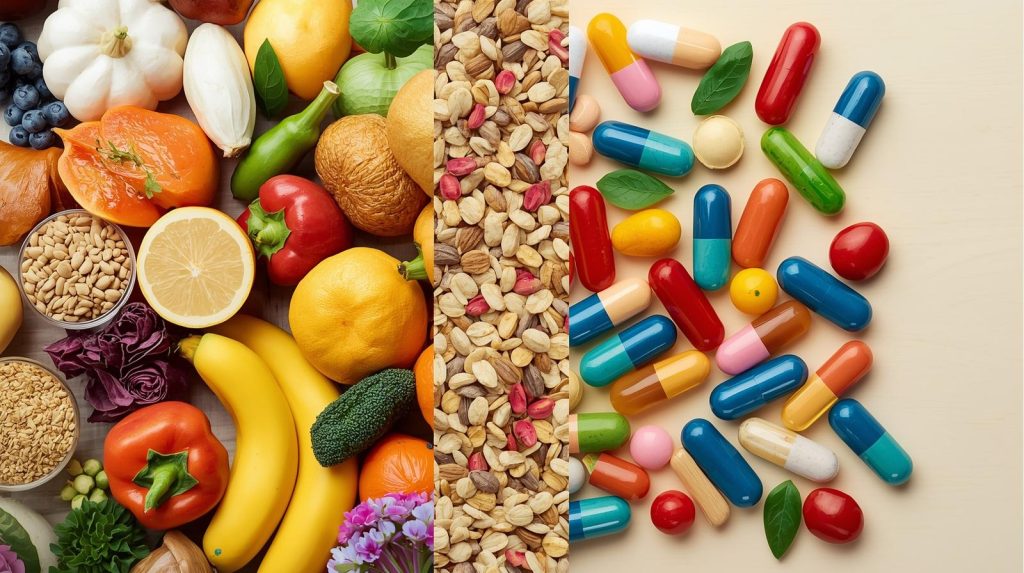
Multivitamins vs. Whole Foods: Which Is Better for Health?
When it comes to staying healthy, many people wonder whether they should rely on multivitamin supplements or get their nutrients from whole foods. Both have their benefits, but understanding the science can help you make better choices for your fitness and overall health.
🥗 Whole Foods: The Natural Powerhouse
Whole foods — fruits, vegetables, grains, legumes, nuts, seeds, and lean proteins — provide more than just vitamins and minerals. They also contain:
- Fiber – Supports digestion and satiety
- Phytonutrients – Compounds with antioxidant and anti-inflammatory properties
- Healthy fats – Essential for hormone production and brain function
- Protein – Critical for muscle repair and growth
Benefits:
- Nutrients are bioavailable, meaning your body absorbs them efficiently.
- Reduces risk of chronic diseases like heart disease, diabetes, and certain cancers.
- Provides a natural balance of nutrients without risk of excess.
Example: Eating an orange gives you vitamin C, fiber, antioxidants, and natural sugars — something a single vitamin C pill cannot replicate.
💊 Multivitamins: The Convenience Option
Multivitamins are supplements that provide a mix of vitamins and minerals in a pill, capsule, or gummy. They are useful in certain situations:
- Nutrient gaps due to restricted diets (vegan, vegetarian, keto)
- Busy lifestyles where it’s hard to eat a variety of foods
- Specific deficiencies diagnosed by a healthcare professional
Benefits:
- Convenient and easy to take daily
- Can prevent deficiency-related health issues
- Helps support overall wellness when diet is lacking
Limitations:
- Nutrients may not be absorbed as efficiently as from whole foods
- No fiber, phytonutrients, or healthy fats
- Overuse can lead to toxicity in fat-soluble vitamins (A, D, E, K)
⚖️ Comparing Whole Foods vs. Multivitamins
| Aspect | Whole Foods | Multivitamins |
| Nutrient Absorption | High | Moderate |
| Provides Phytonutrients | ✅ Yes | ❌ No |
| Fiber Content | ✅ Yes | ❌ No |
| Risk of Overdose | Low | Moderate (if taken excessively) |
| Convenience | Lower | High |
| Supports Overall Health | ✅ Strong | ❌ Limited |
💡 Key Takeaways
- Whole foods first: Prioritize a variety of fruits, vegetables, lean proteins, and whole grains.
- Supplements as backup: Multivitamins are helpful for filling gaps, not replacing a healthy diet.
- Avoid megadoses: More isn’t always better — excess vitamins can harm your health.
- Personalized approach: Age, diet, activity level, and medical conditions determine whether supplementation is necessary.
Final Thoughts
While multivitamins can be useful for convenience or addressing deficiencies, whole foods remain the superior source of nutrition. They provide not only vitamins and minerals but also fiber, antioxidants, and other compounds that support long-term health.
Remember: Supplements are just a tool — your body thrives on real, diverse, and minimally processed foods.